


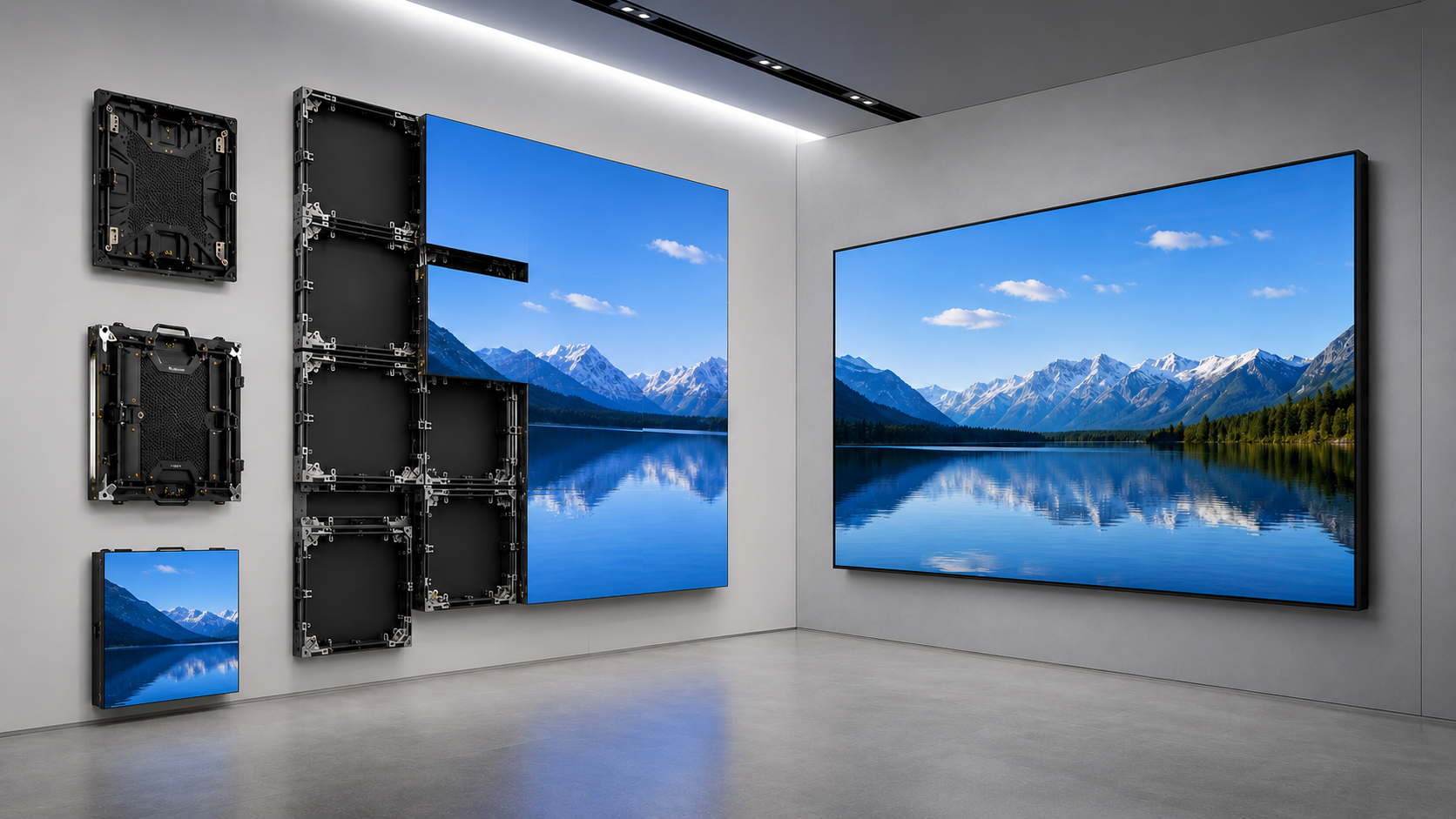
LED video walls work best for large or custom-shaped installations that need to run around the clock. Single large displays win in the smaller rooms where budget and install speed matter more. Procurement teams face this choice on every new venue. With the global video wall market reaching USD 11.81 billion in 2025 and forecast to grow to USD 23.06 billion by 2031, the decision carries real budget weight.
Comparison at a Glance
An LED video wall is built from multiple LED cabinets that lock together into one continuous canvas. Each cabinet is small, modular, and field-replaceable. The format scales to any width or height and tolerates the loss of one or two modules without going dark.
A single large display is produced as a complete, ready-made screen, usually a 98-inch or 110-inch LCD, or an all-in-one LED unit. Since the size and format are decided upfront, the installer should only mount the panel and connect the signal source, which makes it easy to manage but leaves little flexibility for future changes.
| LED Video Wall | Single Large Display | |
|---|---|---|
| Pros | Scalable, seamless, bright, hot-swappable | Fast install, true zero seams, lower power |
| Cons | Higher upfront cost, calibration cycles, complex install | Fixed size, single-point failure, capped around 110 inches |
| Cost (10 m² equivalent) | USD 40,000 to 150,000 | USD 12,000 to 25,000 |
| Best Use Cases | Control rooms, broadcast studios, retail flagships, outdoor signage, XR stages | Board rooms, executive briefing rooms, menu boards, and small retail interiors |
LED Video Wall Pros for Commercial Operators
An LED video wall can grow by adding cabinets. The existing processor usually scales to the new pixel count without replacement, and walls built from high-protection fine-pitch LED displays reach 4K and 8K at canvas sizes a single panel cannot match.
Scale projects illustrate the format's reach. Esdlumen's parent brand, LianTronics, installed a 600-square-meter L-shaped LED video wall in Terminal 1 of Rome Fiumicino Airport, working alongside systems integrator Informasistemi S.p.A. The wall delivers departure information across the check-in hall in a footprint no single panel could fill.
Redundancy keeps mission-critical screens alive. If one cabinet loses signal, the rest of the wall keeps running, and a technician can hot-swap the dead module from the front in minutes. Broadcast control rooms and airport operations centers buy LED partly for this reason.
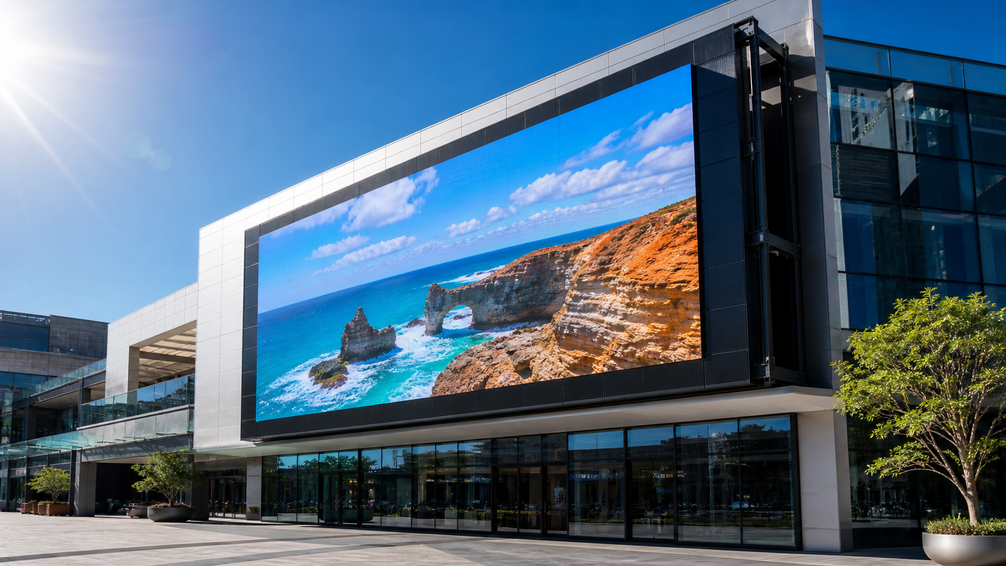
Brightness covers a wider environmental range. Indoor LED walls deliver 800 to 1,500 nits, and outdoor configurations reach 4,000 to 10,000 nits, which handles sunlit retail facades and stadium installations without washout.
Where LED Walls Outperform
Curved and corner installations favor modular cabinets. The flexible curved LED display follows architectural surfaces that a single panel cannot reach.
Virtual production stages have shifted to LED for the same reasons. At AIE VP Studio in Australia, AIE president Guo Lei reports that Esdlumen LED virtual studio display solutions "have perfectly met our expectations in terms of fidelity, moiré reduction, viewing angles, and other key parameters" across virtual production shoots.
LED Video Wall Cons to Plan For
Upfront cost is the largest objection. Indoor LED video walls typically cost three to eight times more per square meter than an equivalent LCD wall. Labor for installation adds another 15 to 25 percent, and viewing distances under 3 meters push the project toward fine-pitch panels below P1.5.
Energy use scales with the wall area. Industry reference figures place LED video wall consumption at 400 to 800 watts per square meter at peak brightness, which adds up quickly across a 15 to 25 square meter installation.
Calibration is another question. Pixel-level color drift and brightness mismatch between cabinets need correction roughly every 12 to 18 months. Walls specified with built-in automatic calibration carry less of this overhead and protect color accuracy as panels age.
Structural mounts, dedicated power circuits, signal routing, and HVAC capacity all need design input before delivery. Unprepared sites are the most common reason LED projects slip on schedule.
Single Large Display Pros in Enterprise Settings
Installation is quick. A 98-inch all-in-one LED or LCD comes in one crate and goes up in a single afternoon. The unit plugs into a standard media player, so there is no video wall processor to configure. Teams working under a fixed launch date benefit most from this speed.
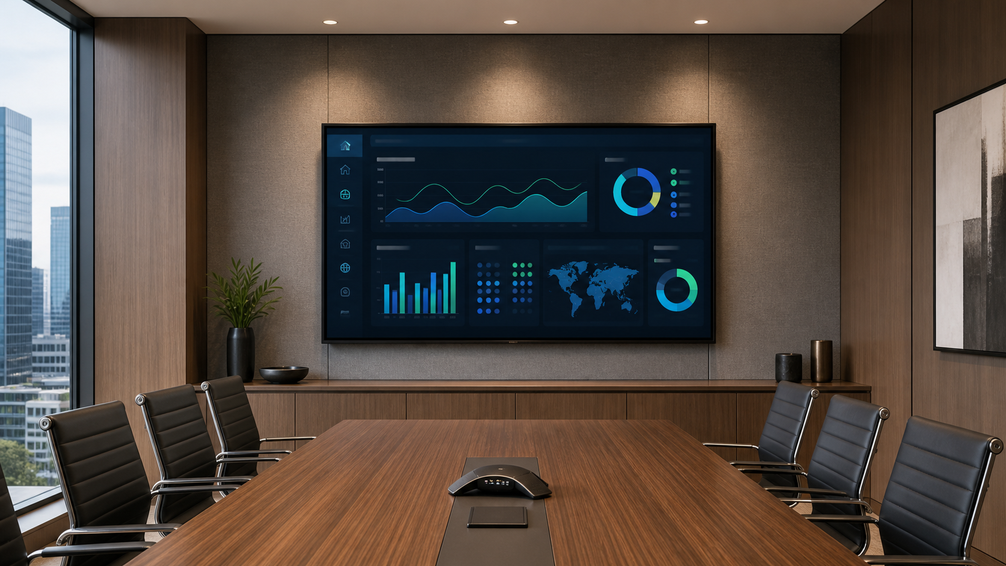
The image looks seamless. Without panel borders to align, the screen shows one even picture with consistent brightness from edge to edge. In board rooms or briefing centers where viewers sit close to the screen, a single display panel is often easier to read than a larger LED wall.
Power use stays low. A 98-inch commercial LCD pulls roughly 250 to 400 watts at full brightness, which is far below what an LED array of the same diagonal draws. Most existing rooms accept the unit without any electrical rewiring.
Single Large Display Cons and Constraints
The largest LCD panels currently ship at 110 inches, and commercial all-in-one LED units cap at around 220 inches. The record-holding LED screen at The Place in Beijing measures 250 m by 30 m for a total area of 7,500 square meters, a scale that a single panel cannot approach.
Logistics restrict where a single panel can go. A 98-inch unit weighs 110 to 150 kilograms and will not fit through standard doorways, narrow corridors, or older service elevators. Building access surveys often eliminate single-panel options before procurement finalizes the spec.
If a single large display fails, the installation goes dark until a replacement arrives, which can take weeks for non-stocked sizes. A modular wall keeps running with one cabinet missing.
Resolution is fixed at purchase. There is no upgrade path beyond replacing the entire unit, which complicates refresh planning for venues that update content technology every 3 to 5 years.
Cost Comparison Between LED Video Walls and Single Large Displays
Cost gaps appear most clearly when both formats are sized to the same room. The table below benchmarks the cost factors a procurement team typically reviews before committing to either side of the decision.
| Cost Factor | LED Video Wall | Single Large Display |
|---|---|---|
| Hardware (10 m² equivalent) | USD 40,000 to 150,000 | USD 12,000 to 25,000 |
| Installation labor | +15 to 25% on hardware | +5 to 10% on hardware |
| Pixel pitch premium | P1.2 to P1.5: +30 to 50% over P2.5 | Fixed at panel native resolution |
| Power draw | 400 to 800 W/m² at peak | 250 to 400 W per unit |
| Operational lifespan | ~100,000 hours | 50,000 to 60,000 hours |
| 10-year replacement need | None expected | 1 unit replacement is typical |
| Spare parts budget | 3 to 5% of cabinet count | Full unit standby |
| Service contract | Multi-year cabinet-level | Per-unit warranty |
Pixel pitch is the largest LED cost driver. The average indoor LED display pitch is forecast to ship at 2.1 mm by 2026, which is pulling fine-pitch unit pricing down year over year and softening the entry point for corporate deployments.
Lifecycle math reshapes the comparison. A buyer planning a 10-year operating window should factor at least one LCD replacement into the budget, since backlight degradation and color shift accelerate after the 4-year mark.
How to Choose Between an LED Video Wall and a Single Large Display
Specify an LED video wall when viewing distance exceeds 5 meters, the design calls for a non-rectangular shape, ambient light is high, or the installation needs 24/7 uptime with cabinet-level redundancy.
A BIM Plus-X indoor fixed LED screen or similar fine-pitch wall covers control rooms and broadcast environments cleanly.
Specify a single large display when the wall must go up in days, the room cannot accept a multi-cabinet structural load, the audience sits within 5 meters of the screen, and the content is mostly UHD video. Most boardrooms and small retail interiors fall in this profile.
For projects sitting between the two profiles, a viewing-distance calculation removes most of the guesswork. The LED wall calculator on Esdlumen's site returns the minimum pixel pitch and optimal cabinet count for any given room.
Indoor Corporate and Lobby Spaces
Lobbies and atriums with a viewing distance of above 5 meters suit modular LED, since a single 98-inch panel disappears at that scale. Below that distance, a UHD single display gives sharper close-up text and a lower install cost.
Reviewing LED display fundamentals before the briefing keeps integrators and procurement aligned.
Outdoor and High-Ambient Environments
Outdoor signage, stadium ribbons, and high-ambient retail facades require LED. LCDs are not engineered for sustained sunlight or weather exposure, and no all-in-one LED unit currently matches the scale outdoor projects typically demand.
Rental and Touring Scenarios
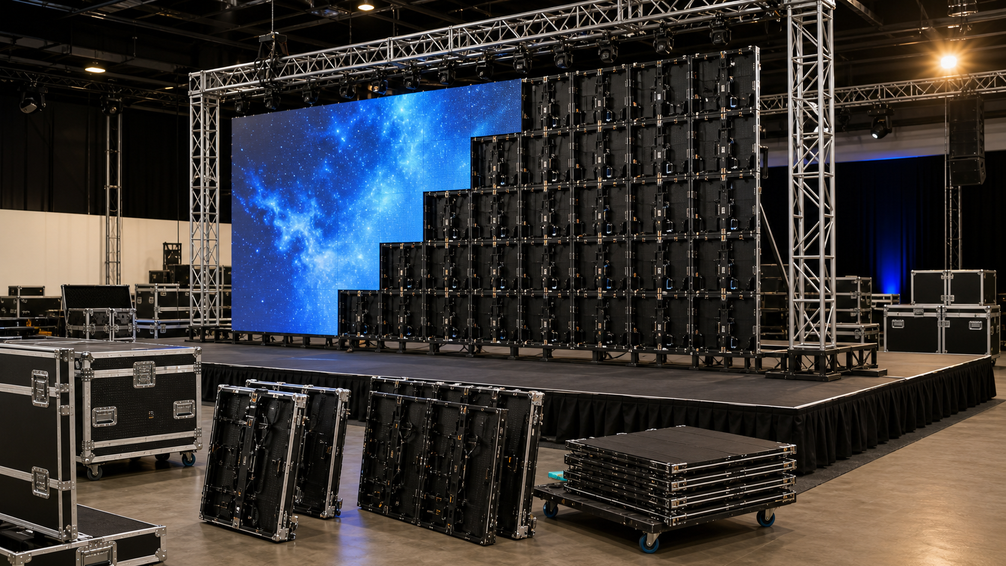
Touring concerts, conferences, and exhibition stands almost always use modular LED for portability and fast assembly. High-end fine-pitch rental LED displays ship in flight cases, lock with cam-locks, and reach show-ready brightness within minutes.
Future trends in the LED video wall industry point to lighter cabinets and faster on-site setup as the next priority for the rental category. Single large displays are rare in rental because of weight and damage risk.
FAQs
What is an LED video wall used for?
An LED video wall is used for large-format digital signage in control rooms, retail flagships, broadcast studios, sports venues, airports, and corporate lobbies. It is also standard equipment in XR virtual production and live event staging.
Is an LED video wall better than a single large display?
An LED video wall is better when the application requires a large size, a non-standard shape, outdoor brightness, or 24/7 redundancy. A single large display is better for small rooms, fast deployment, and tight budgets.
How long does an LED video wall last?
Most commercial LED video walls last around 100,000 hours, which is roughly 10 to 11 years of continuous operation. Lifespan depends on brightness setting, ambient temperature, and routine calibration.
What pixel pitch should a corporate LED video wall use?
Corporate LED video walls viewed at close range typically need a pixel pitch between P1.2 and P1.9. Larger lobby installations viewed from 5 meters or more can use P2.5 without visible quality loss.
Can a single large display replace an LED video wall?
A single large display can replace an LED video wall in small rooms with viewing distances under 5 meters. It cannot match the size, scalability, or redundancy of a multi-cabinet LED video wall in larger commercial spaces.
What does an LED video wall cost in 2026?
Indoor LED video walls cost roughly USD 4,000 to USD 15,000 per square meter installed, depending on pixel pitch, brightness, and service terms. Outdoor walls add IP65 weatherproofing and start around USD 6,000 per square meter.
Summary
The choice between an LED video wall and a single large display comes down to viewing distance, room size, uptime requirements, and budget across the operating life of the venue. LED video walls win on scale, flexibility, brightness, and redundancy, which is why direct-view LED is taking share in commercial installations.
Single large displays win on speed of deployment, simpler content paths, and lower upfront cost in smaller rooms. Matching the format to the actual viewing distance and operational profile is what separates a display that pays back across its full service life from one that gets replaced early.
Engineering-led manufacturers make this comparison easier to run. Esdlumen, the rental and creative-display sub-brand of LianTronics, builds across fixed, rental, and XR LED categories, with deployments ranging from the Rome Fiumicino Airport check-in wall to the AIE virtual production studio in Australia. Both projects sit on the LED side of the trade-off discussed in this article and are documented openly in the company's case library.
Sources & References
- Mordor Intelligence, Video Wall Market Size, Share & Industry Report 2026-2031
- AVIXA Xchange / Omdia, The Average Pixel Pitch for Indoor LED Displays Expected to Lower to 2.1 mm by 2026
- Guinness World Records, Largest LED screen – The Place, Beijing
- Lian Tronics, Rome Fiumicino Airport Was Renovated with LianTronics 600sqm LED Video Wall


