


One question comes up a lot: what is a video wall, and do you really need one instead of a single large display? For most projects, a video wall only makes sense when size, brightness, shape, or long-term service matter. A single display can be fine in a small meeting room or shop corner. A video wall is the better choice when you need a seamless canvas for a lobby, control room, store, stage, airport, station, or studio.
The difference shows up in daily use: viewing distance, brightness, service access, content control, and how clean the screen looks in the room. If you are planning your first large display, it is worth understanding the main options before you compare prices.
What changes when you move from one display to a video wall
Moving from one display to a video wall changes the project from "buying a screen" to building a display system. A single display has a fixed size, fixed shape, and limited brightness range. A video wall is made from multiple LED cabinets or display panels, so the screen can be built wider, taller, curved, corner-shaped, or fitted to a specific wall opening.
The viewing experience also changes. With one display, the resolution and size are already set by the product. With a video wall, pixel pitch, cabinet size, viewing distance, and content resolution all need to be planned together. A close-view lobby wall may need a finer pitch so text and product visuals stay sharp. A large stage or transport display can use a larger pitch because the audience stands farther away.
Control becomes more important too. A video wall usually needs a processor, signal routing, content management, calibration, and sometimes backup power or backup signal paths. The wall may show one large image, split-screen content, live video, dashboards, or scheduled media across different zones.
Maintenance changes last. A single display is usually repaired or replaced as one unit. A video wall can often be serviced by module, cabinet, power supply, or receiving card. That makes service access, spare parts, front or rear maintenance, and long-term support part of the buying decision from the start.
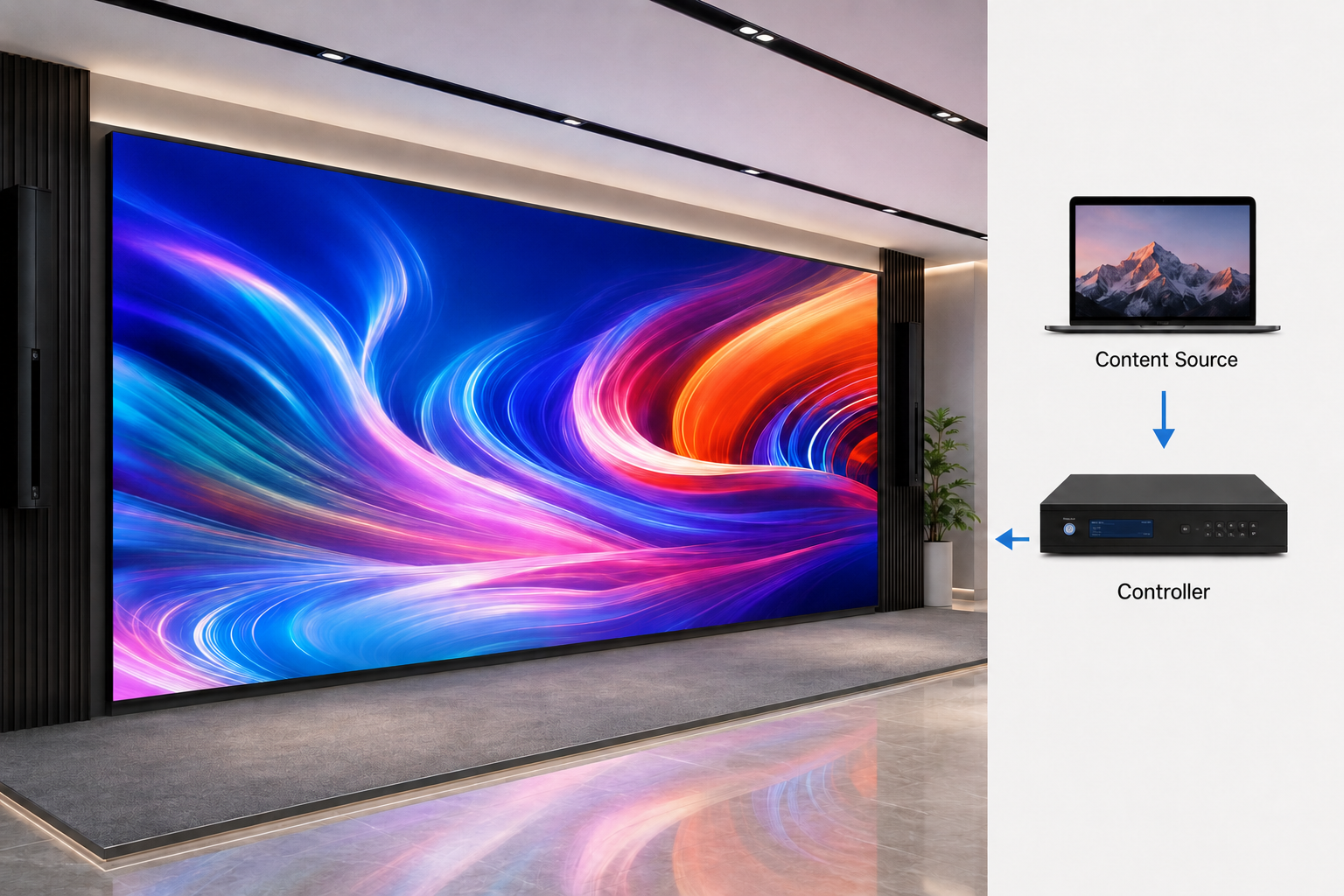
Video wall type comparison
| Video wall type | Best fit | Main advantages | Watch-outs |
|---|---|---|---|
| Indoor LED video wall | Lobbies, retail spaces, meeting rooms, showrooms, command rooms | Seamless image, flexible size, strong brightness, custom shapes | Higher cost at fine pixel pitch; needs careful alignment and service planning |
| Outdoor LED video wall | Building facades, transport hubs, outdoor advertising, and stadium areas | High brightness, weather protection, and large-format visibility | Requires structure, heat planning, waterproofing, power design, and safe service access |
| LCD video wall | Security rooms, monitoring centers, and operations spaces | Lower panel cost, familiar display technology, and good for dense information | Visible bezels, limited shape flexibility, and brightness limits in some spaces |
| Projection wall | Dark rooms, training spaces, and large presentation areas | Can cover a large image area with the right setup | Needs light control, throw distance, calibration, screen surface, and edge blending |
| Rental LED wall | Events, launches, trade shows, touring stages | Modular, fast to deploy, and easy to resize for different venues | Requires rigging, cases, crew time, spare modules, and repeated calibration |
For a 16:9 meeting room or command room, the BIM MAX 16:9 indoor LED display is usually a relevant planning reference because the format already matches common presentation and monitoring layouts.
Pixel pitch and brightness: the specs people notice first
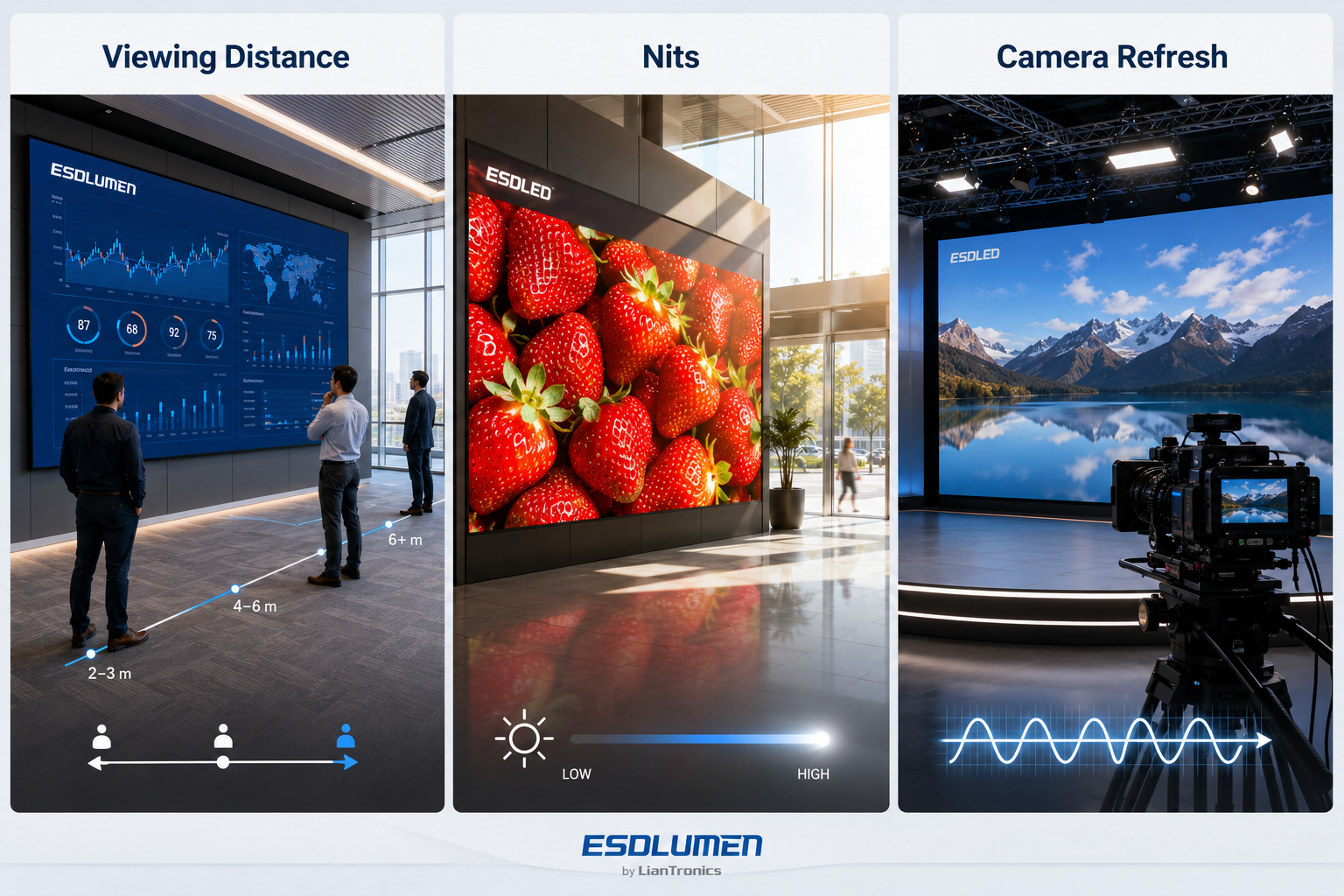
Start with pixel pitch. Pixel pitch is the distance between LED pixels, and it decides how sharp the wall looks up close. A simple rule works well at the start: close viewing needs a finer pitch, and far viewing can use a larger pitch.
A P1.5 wall belongs in the close-view conversation. P2.6 or P3.9 can make more sense when the audience stands farther away. The right choice depends on the closest viewing distance, the type of content, and whether people need to read small text or mainly see large visuals.
For a close-view lobby or retail wall, a fine-pitch option such as the BIM Plus-X indoor fixed LED display belongs in the early comparison. This is the kind of use case where people may stand near the screen and still expect text, product visuals, and motion graphics to look clean.
Brightness is the other daily-use spec. Outdoor and window-facing walls need more nits. Boardrooms and control rooms need brightness that stays comfortable during long viewing. For outdoor screens, the IP rating explains dust and water protection, so it should be compared alongside brightness, structure, and service access.
Cost and installation: where the budget really goes
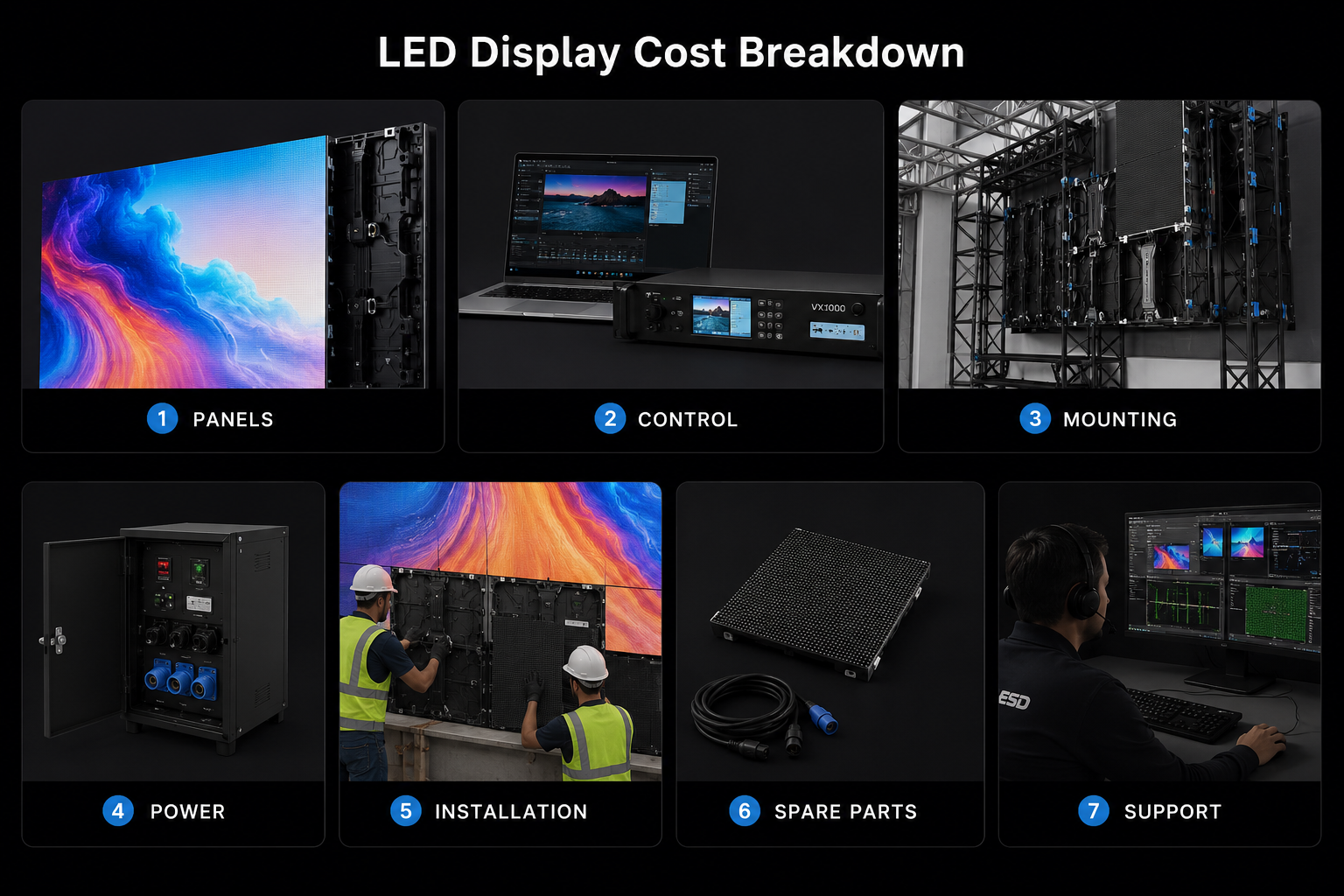
The screen price is not the whole project. Indoor fine-pitch LED costs more because there are more pixels in the same area and the alignment has to be tighter. Outdoor LED adds brightness, weather protection, structure, power, and heat planning. Rental LED adds rigging, flight cases, repeated setup, crew time, and spare modules.
LCD walls are often cheaper at the panel level, but bezels, mounts, and controllers still add up. Projection can look simple until the project includes projectors, lenses, screen surface, edge blending, room light control, and calibration.
The real difference is the whole system: panels, control, mounting, power, signal, installation, calibration, spare parts, warranty, content management, and support.
Who should choose LED, LCD, projection, or rental?
Choose LED when the wall needs to look seamless, stay bright, fit a custom size, or run in a high-visibility space. It is often the safest option for lobbies, retail stores, command rooms, transport hubs, and public-facing installations.
Choose LCD when the project is mainly about monitoring, the room is indoors, and visible bezels are acceptable. LCD can still work well for security rooms, operations centers, and other spaces where people care more about information density than a seamless image.
Choose projection when the space is dark and controlled. Projection can work for training rooms and presentation spaces, but it depends heavily on room lighting, surface quality, throw distance, and calibration.
Choose rental LED for events, launches, changing stages, and temporary brand experiences. A fine-pitch rental LED screen such as Pilot Pro makes more sense when the wall has to move between venues, handle repeated setup, and still look sharp on camera.
If the design needs curves or immersive shapes, a curved rental LED wall such as E-Swan is a better reference point than a standard flat wall. Curved stages, wraparound spaces, and experiential displays usually need different cabinet design, alignment, and installation planning.
Service matters after the launch as much as the first installation does. Before choosing a supplier, check warranty terms, spare module access, controller support, and response coverage. The Esdlumen global service network is useful to review here, especially for projects with multiple locations or long operating hours.
A public project such as the 126-square-meter rail-station information wall gives a better sense of how a large LED information display works in a real transport environment.
Video Wall Planning Checklist
- Start with the space: viewing distance, room brightness, wall size, mounting surface, and the type of content people need to see.
- Next, compare the visible specs: pixel pitch for sharpness, nits for brightness, refresh rate for camera use, and resolution for detailed content.
- Match the type to the job: LED for seamless custom walls, LCD for indoor monitoring, projection for dark controlled rooms, and rental LED for temporary stages.
- Look past the panel price: mounting, controllers, power, signal, installation, calibration, spare parts, warranty, and support all affect the final cost.
- Plan after-sales support early: Esdlumen's global service network 1-to-1 maintenance training, product warranty support, and on-site technical support for important events.
Frequently asked questions
Is a video wall better than one large display?
Only when the room actually needs it. A single display is simpler and can be enough for small spaces. A video wall is usually better when you need a very large screen, a seamless look, a custom size, higher brightness, or easier service in sections.
What pixel pitch should I choose?
Start with viewing distance. Close viewing needs a finer pitch; far viewing can use a larger pitch. As a rough starting point, P1.5 suits closer indoor viewing, P2.6 works for more distance, and P3.9 or larger can make sense for big visuals viewed farther back.
Why do video wall prices vary so much?
Because the wall is a full system, not just a screen. Pixel pitch, brightness, structure, power, controllers, installation, calibration, spare parts, warranty, and content control all affect the final cost. That is why two walls with the same physical size can land at very different prices.
Should I choose LED, LCD, or projection?
Choose LED when seamless appearance, brightness, custom size, or outdoor use matters. Choose LCD when the project is a simpler indoor monitoring wall and bezels are acceptable. Choose projection only when the room is dark enough and the setup can handle alignment, throw distance, and light control.


