


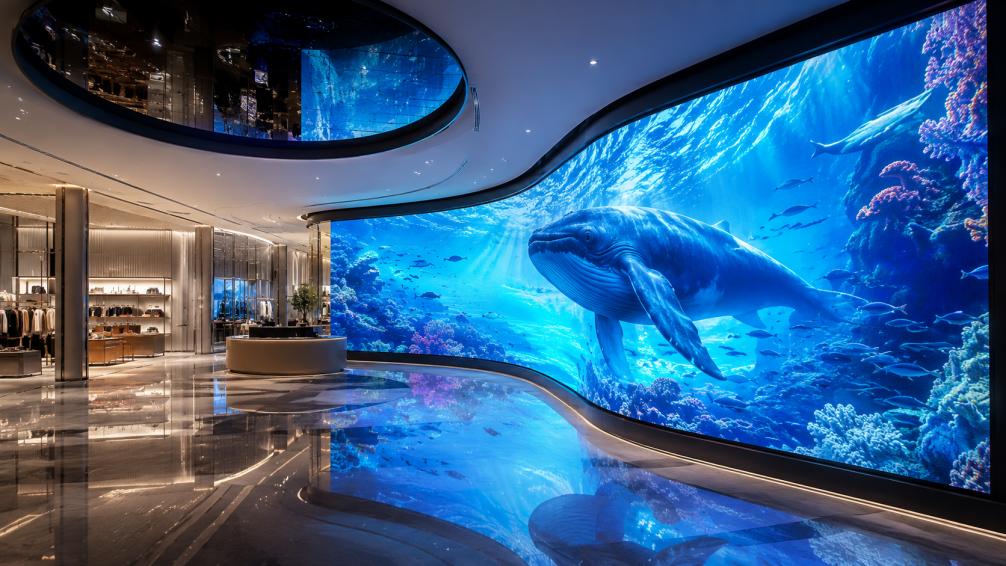
You've likely been impressed by the display screens built directly into the spaces of shopping mall atriums, concert halls, museum lobbies, or glass-walled shop windows. They wrap around columns, curve around sharp corners, ripple behind performers, or radiate light through transparent glass, showcasing exquisite beauty—this is where flexible LED screens excel, especially when traditional flat displays cannot follow curved spaces, irregular surfaces, or transparent structures.
They no longer force creativity into rectangles, but rather transform rectangles into curves, waves, cylinders, or digital skins to beautifully display their inherent charm. When artistic pursuits meet products, flexible LED screens give designers more freedom to work with curved spaces, irregular surfaces, and transparent structures.
Flexibility Starts with the Structure
Not every curved display bends in the same way. The key question is not only “What shape do we want?” but “Which structure can create that shape reliably and maintain it over time?”
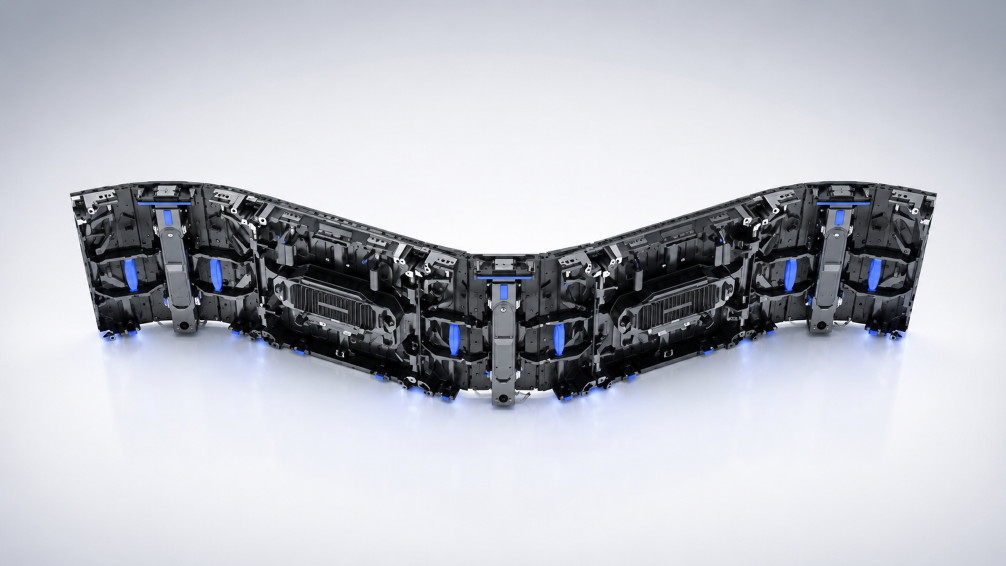
For rental stages and touring events, adjustable arc structures provide more freedom because the screen shape can change between different productions. E-Swan Series applies this approach with adjustable panels designed for indoor curved applications, where fast setup, accurate alignment, and stable visual performance are essential.
For permanent curved installations, flexible modules and curved cabinets offer another solution. BIM MIN is built for indoor commercial spaces where smooth splicing, front maintenance, and consistent image quality matter. Its flexible structure supports curved surfaces in retail, corporate, and exhibition environments without relying on a fully custom display design.
From Cylinders to Corners: Matching Shape to Purpose
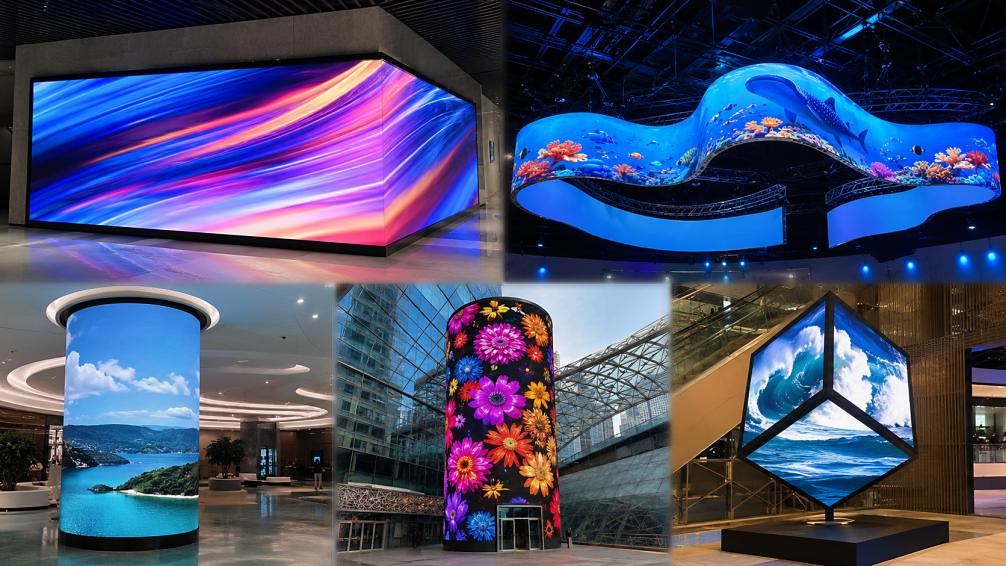
In everyday life, cylindrical screens work well as landmarks because the message is visible from several directions. They suit atriums, exhibition halls, transport hubs, and retail spaces where people approach from more than one path. Content should be designed for movement around the screen, not copied from a flat 16:9 layout. Type, faces, and key details need enough time and space to remain legible as viewers pass.
Wave-shaped displays create a different effect. A shallow curve guides the eye across a stage, while a deeper wave adds rhythm behind performers or inside an art installation. Smooth transitions matter more than complexity. When the curve is too tight for the module or viewing distance, the image can break into visible facets. We therefore begin with the minimum bending radius and audience position, then design the shape and content together.
Choose a flexible LED screen based on the job the surface must do. A retail column may need to stop traffic. A concert backdrop must respond to lighting and cameras. A museum wall should create immersion without competing with the exhibit. The strongest result is not the most complicated shape, but the one that feels natural in the space.
Soft Does Not Mean Fragile
“Soft” can sound delicate, but in LED display engineering it often means adaptable. E-Corner Series uses flexible corner LED panels with a 90° small arc design, enabling creative corner, cylinder, and curved installations while maintaining precise splicing, stable visual performance, and efficient deployment for rental, stage, and commercial display applications.
Outdoor creative displays require another form of flexibility. E-Corner Series also supports innovative architectural and event applications through its 90° corner-forming capability, mixed splicing design, and reliable structure. It helps create distinctive curved and corner LED displays while balancing visual impact, installation flexibility, and long-term durability across different scenarios.
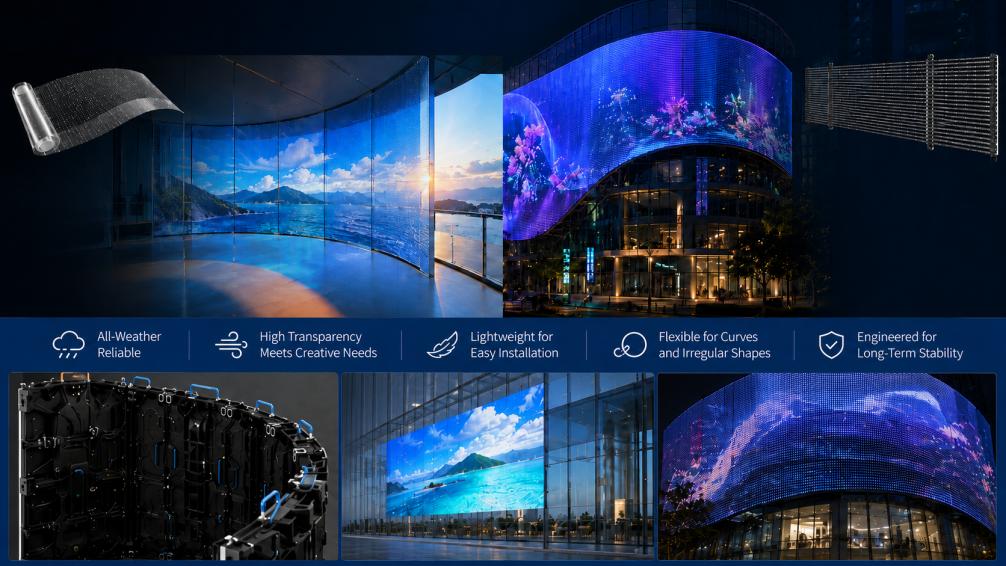
These technologies serve different purposes. Hinged panels provide controlled shaping for repeatable curved installations. Film displays integrate with glass surfaces where transparency matters. Mesh displays support large outdoor structures that require airflow and lightweight construction.
A Practical Selection Method
Start with the installation surface and the required shape. Is the screen expected to form a concave curve, convex curve, cylinder, wave, or irregular structure? Measure the minimum radius, check the mounting conditions, and review the LED display installation requirements before finalizing the structure.
Second, match pixel pitch to the viewing distance and content type. Retail displays, galleries, studios, and control rooms usually require a finer pitch for close viewing. Large stages and architectural installations can prioritize viewing coverage because audiences are farther away.
Third, consider maintenance before installation begins. Curved displays are harder to access after construction is complete, so front maintenance, module replacement, connection methods, and system compatibility should be reviewed during the design stage.
Finally, define the role of the screen within the space. High-contrast curved displays create a strong visual focus, while transparent film or mesh solutions help preserve natural light and architectural features.
About the Price of Flexible LED Screens
Several factors directly influence the final cost of a flexible LED screen:
- Shaped by different technical choices
- Pixel pitch changes resolution and viewing distance; brightness depends on indoor or outdoor use
- Curved, corner, film or mesh structures require different engineering
- Protection grade, installation method, front or rear maintenance, control system, and support needs
That is the reason why we recommend a custom quotation instead of a fixed price list. Share your space, shape, size, and application goals with the team, and we can match the right product and budget plan for a smoother, more personalized display experience.
Real Projects Make the Engineering More Credible
Creative LED designs become more convincing when the engineering behind them is visible. At the Digital Art Gallery (DAG) project in Gorizia, Italy, the challenge was not simply installing a large LED surface but creating a continuous visual environment where curved structures and digital artwork could work together. The project transformed a 925㎡ space into an immersive curved LED canvas, requiring careful control of screen geometry, viewing angles, image consistency, and installation precision.
For this type of application, the display structure must follow the space rather than force the architecture to change. The engineering process involves evaluating curve transitions, module arrangement, maintenance access, and content adaptation before installation begins.
Similar considerations apply to architectural surfaces and outdoor creative displays. Transparent and mesh LED solutions need to balance brightness, visibility, weight, and environmental protection while maintaining harmony with the building itself.
These projects show that flexible LED screens create value through more than visual impact. The real difference comes from choosing the right structure and engineering approach to make complex spaces display-ready.
Frequently Asked Questions
What shapes can flexible LED screens create?
They can be used for cylinders, waves, concave and convex curves, curved glass displays, and architectural surfaces. For example, adjustable arc systems are suitable for changing stage shapes, while flexible modules and mesh or film solutions support permanent curved, transparent, and outdoor installations.
Can flexible LED screens be used outdoors?
Yes. Mesh displays such as LWWG are designed for outdoor facades and large architectural surfaces where transparency, lightweight structure, and weather protection are important.
Are flexible LED screens more expensive than flat LED screens?
Flexible LED screens are usually more expensive than standard flat displays because they require specialized structures, customized installation methods, and additional engineering for curved or transparent applications. The final cost depends on pixel pitch, size, protection level, maintenance design, and project requirements.
Are soft LED displays fragile?
No. “Soft” does not mean weak. In LED display engineering, it means adaptable. A film display works like a luminous layer on glass, a mesh display provides lightweight, transparent coverage for large outdoor structures, while a film display integrates with glass surfaces where visibility matters.


